140989/2072/073


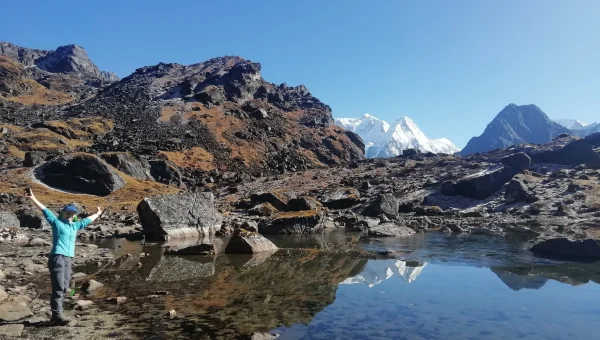
Kanchenjunga Base Camp Trek is an ideal trek. It is suitable for those who have the desire to travel to remote regions of Nepal. Kanchenjunga is a majestic mountain in eastern Nepal. The route for trekking was opened in 1988 AD. This trek also provides a chance to visit the Pathibhara Temple, an important religious site for many Indian and Nepali pilgrims.
But the benefits of the Kanchenjunga Trek make the effort worthwhile. The hike passes through rivers, lush forest trails, quaint villages, and many other places. In addition, you encounter a variety of wildlife, including elusive creatures like snow leopards. You will remember this experience for the rest of your life.
The trail goes northwards to Ghumsa, where it climbs to the Kanchenjunga Base Camp (5143 m), going through a fantastic high alpine landscape. It then proceeds to the east via 2 passes and continues to the Yalung Base Camp (4500 m). Then the trail goes back south to Taplejung, the starting and ending point of the Kanchenjunga Base Camp Trek.
Permit required for Kanchenjunga Trekking
Some of the most breathtaking scenery in the world can be found in the pristine and isolated Kanchenjunga region. Trekking routes in the Kanchenjunga provide breathtaking views of the valleys, mountains, and glaciers. Trekkers can discover more about the culture and way of life of the locals in this isolated area by touring the nearby villages.
Price of Permits: Restricted Area Permit (RAP)
Permit fees for foreigners are $20 for the first week and $25 starting the following week. You can pay in US dollars or the equivalent amount in Nepali currency to obtain it. Please go to the website of the Nepali immigration department for additional details.
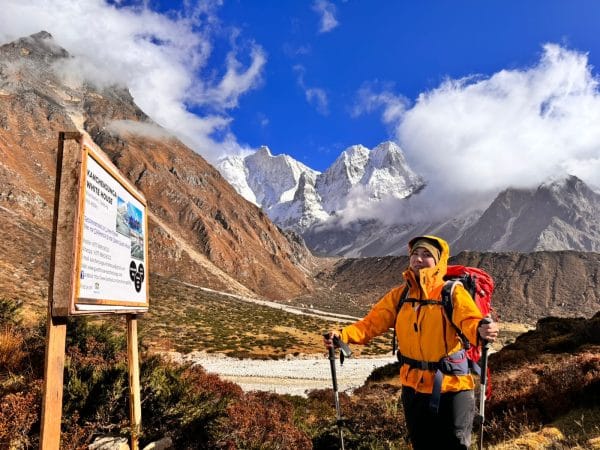
Project for (KCAP)
The Kanchenjunga Conservation Area Project is overseen by the Nepal Army (KCAP). It was founded in 1998 with the goal of safeguarding the area. Therefore, in order to trek in the Kanchenjunga region, a permit from KCAP is also needed. The permit costs Rs. 2000. This permit has no time restriction.
Necessary paperwork to obtain the permit
Finding a group of hikers is the first step. They are available via a travel agency or online. Finding a reputable travel agency that can assist you with the paperwork and obtaining the permit is the next step.
Obtaining the necessary paperwork for the permit is the next step after identifying a group and an agency. The following is the list of documents:
⦁ A duplicate of your passport
⦁ Two current passport-sized photos
⦁ Policy for travel insurance
⦁ Report on Vaccinations and Travel Plans
⦁ Coverage Information for the guide
After your travel agency completes the necessary paperwork, you will receive your permit to trek the Kanchenjunga.
Lodges or teahouses with basic facilities such as beds, blankets, and pillows are accommodation types during the Trek. The availability of attached bathrooms is there in the lower regions only. As you go higher, the bathrooms are outside the teahouses. The additional facilities like using Wi-Fi, charging electronic devices, laundry, hot shower, etc. Need to pay an extra.
The 3-course full-board meals are provided during the Trek. Meals options are limited but Dal-Bhat is the primary option.
In Lower Places here will be Bottled water, and if you go higher there will be option either Tap water, and boiled water for drinking water during the Trek. Pay an extra cost for drinking or boiled water at teahouses or lodges or buy bottled water as a preference. For safe drinking water, carry water purification kits and a water bottle for ease.
Internet and Phone networks are stable mostly in the lower regions. as you go higher regions, networks are unstable. For the use of Wi-Fi, pay an additional cost at teahouses.
Spring (Mar – May) and Autumn (Sep-Nov) are the best seasons for the Trek. The clear weather, stable temperatures, awesome panoramic vistas, and comfortable trekking trails make these seasons ideal for this trek.
The rainy (Jun – Aug) and winter (Dec – Feb) seasons are not ideal due to unpredictable and unstable weather and temperature. The trekking trails are slippery, muddy, or snowy, and the availability of accommodations is limited.
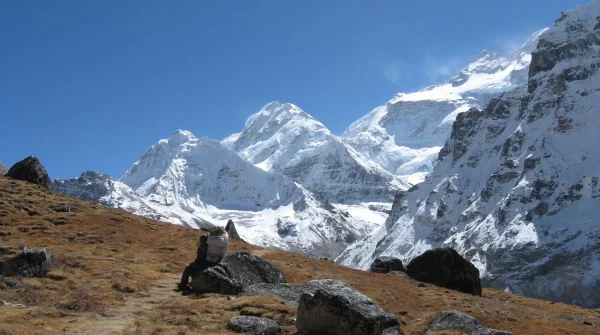
The highest elevation during Kanchenjunga Base Camp, which lies at (5,153 m). Base Camp Trek is difficult considering its ascents and descents, high elevations, daily long hours of walking, rough trails, and limited availability of teahouses or lodges. Also, the chances of getting altitude sickness are common. Thus, acclimatization rest is essential. With proper preparation, this trek is possible.
Biratnagar (100m); drive to Basantpur (2200m), 120km/6h.
Chauki (2700m)
Gupha Pokhari
Dobhan(660m)
Mitlung (890m)
Chirwa (1185m)
Sekathum (1640m)
Amjilasha (2490m)
Gyabla (2730m)
Ghunsa (3430m)
Ghunsa
Kambachen (4040m)
Lhonak (4790m) 9km/650m
Pangpema Base camp (5140m)
Ghunsa (3430m) .
Sele Lapass (4500m) 8km/1100m/6h.
Tseram (3870m)& cross Mirgin La (4480m) 7km/400m/-1000m/8h.
Ramche (4620m) 7km/650m, Octangand Yalung Glacier, walk 7h.
Tortong (2995m) 15km/-1500m/7hr
Yamphudim(2070m) 12km/600m/-2000m/7h
Khebang (1740m) 9km/900m/-1200m/7h.
Phakholing (800m) 14km/ 300/m/-1000m/
Tharpu/ (1600m) 6km/1200m/-300/4
Bhadrapur, 190km/9h
Kathmandu (1330m)
Altitude Sickness is common in the Trek. To prevent it, acclimatization rest is essential. Thus, utilize rest days properly to adapt to the surroundings.
Symptoms of altitude sickness are
How can I Avoid Mountain Sickness While Trekking in Nepal?
Inform your guides if you experience any symptoms during the trek.
Kanchenjunga Trek is demanding due to its challenging terrain, daily long hours of walking, high elevations, several ups and downs, and rugged trails. Thus, a strong fitness level is a key factor for this trek. Therefore, we recommend trekkers participate in physical exercises and short hikes for a few months and necessary physical check-ups before commencing this trek.
Travel Insurance is a safety tool for trekking in the mountains. It should cover all emergencies including medical costs, loss of goods, flight delays, evacuation, and high elevations above 5000 m. getting travel insurance is beneficial. Please Check out FAQ for more information.
Guide and Porters are optional but for a comfortable trekking experience hiring a Guide and porter is the ideal decision. Our guides and porters are professional and have lots of experience in the mountains. Our team ensures trekkers’ safety as it is the top priority.
What should I pack for the Trek ?
Below equipment list is only a guideline. The personal items are of individual interest and choice. you can choose from your preferred brands using your expertise. You can also shop the given equipment and clothing at a reasonable price at stores in Thamel, Kathmandu. The most important fact that one should keep in mind is that one should have enough clothes to tackle the cold weather in the Himalayas.
Upper Body – Head / Ears / Eyes
Hand
Core Body
Lower Body – Legs
Feet
Other Essential
Medicines and First Aid Kit
Optional
Fitness Level: This Trip Requires you to be in Good Health with Physically Fitness.
Skills: Your familiarity with the mountainous terrain and previous trekking experience will be plus points.
How much does the Trek cost ?
The cost depend on Number of people and standard of service
Where can I find a permit ?
The Kanchenjunga Conservation Area Project (KCAP) and the Restricted Area Permit (RAP) are the two permits needed for the trek. KCAP and RAP are available from the Department of Immigration Office in Kalikasthan and the Nepal Tourism Board in Kathmandu. For a trustworthy and deserving trek towards the Kanchengunja region, you can quickly apply for your Kanchenjunga permit through reputed Trekking Agency.
Does trekking in the Kanchenjunga region require a permit ?
Certenly, because the Kanchenjunga region is a restricted area, you require a special trekking permit in order to enter.
Which permits are available for the Trek ?
The Kanchenjunga Conservation Area Permit (KCAP) and the Restricted Area Permit (RAP) are the two different kinds of permits.
Does obtaining the permit require joining a trekking group or hiring a guide ?
Indeed, trekking in the Kanchenjunga region requires a minimum of two people and the hiring of a certified guide.
What time of year is ideal for trekking ?
When the weather permits, spring (March to May) and fall (September to November) are the ideal seasons for trekking in the Kanchenjunga region.
Does obtaining the permit have any age restrictions ?
Although there are no age restrictions, all trekkers should be in good physical condition because of the difficult terrain and high altitudes.
What paperwork is required in order to apply for the permit ?
To apply for the permit, you will require a copy of your passport, a passport-sized photo, and the help of a registered Trekking Agency.
If I need more time to complete the trek, can I extend my permit ?
Extensions might be feasible, but they come with extra costs and government approval
To reserve your Trek with us, simply Contact us. For a successful Trek,