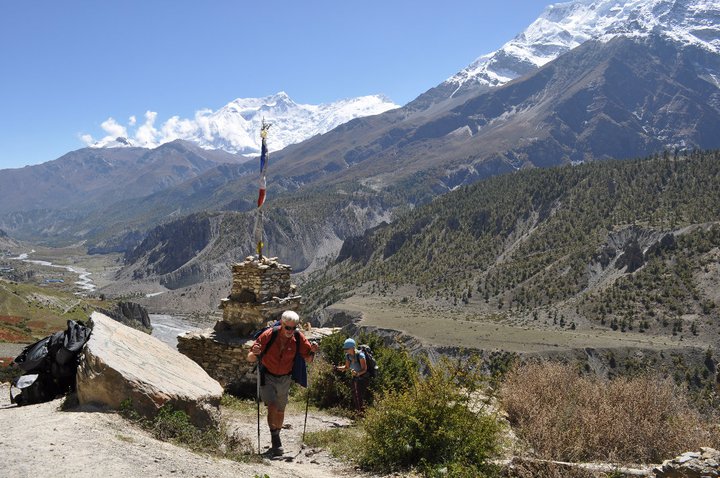
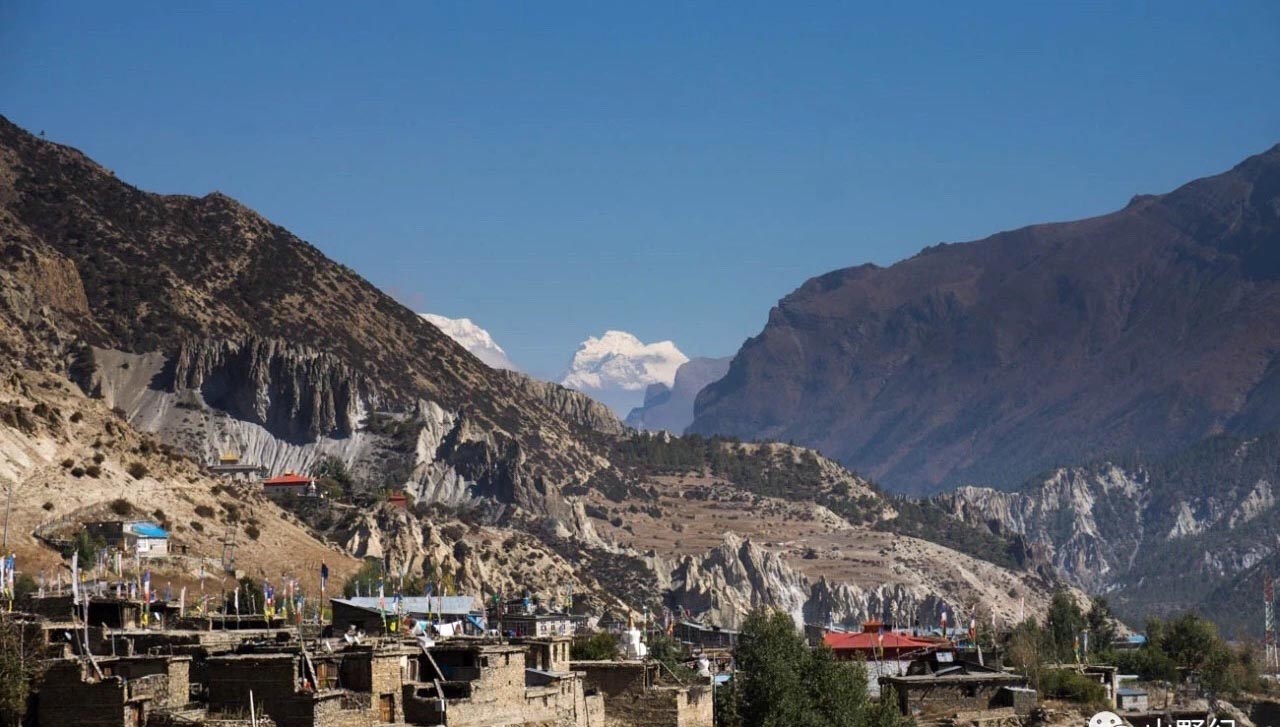
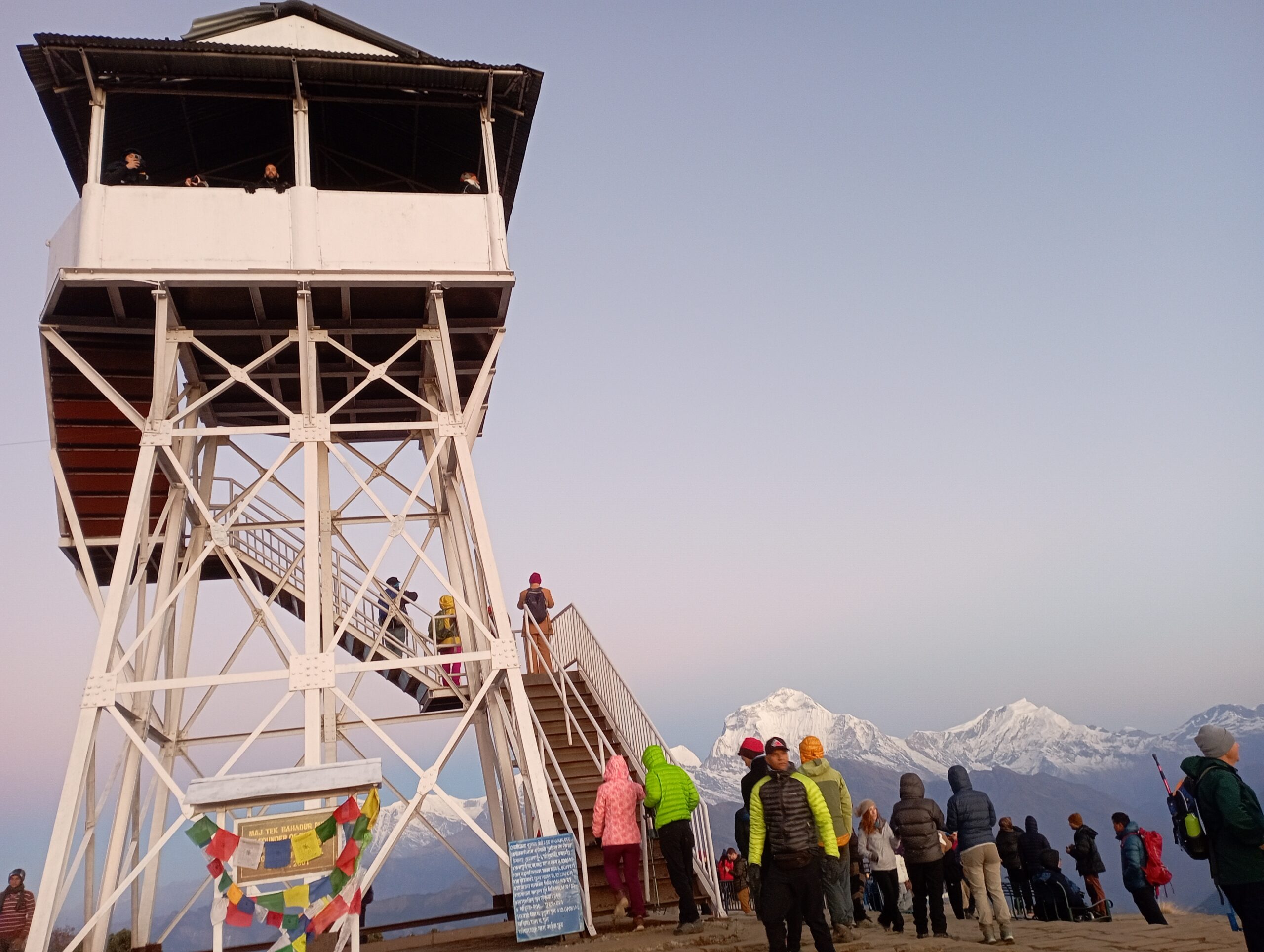
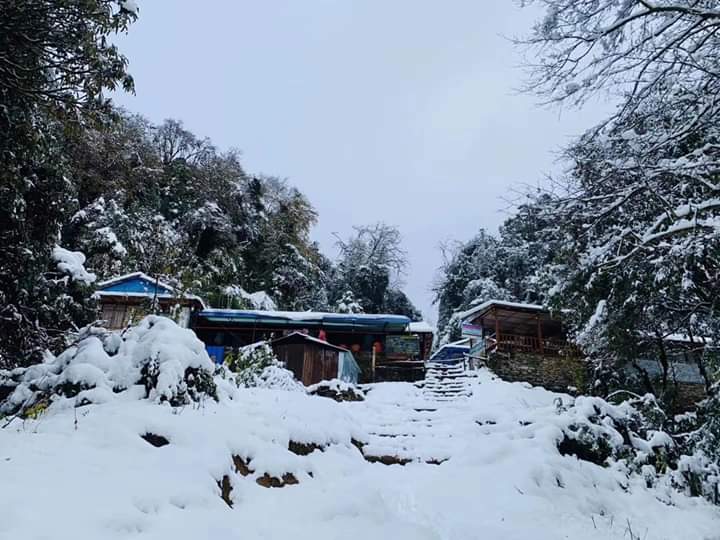
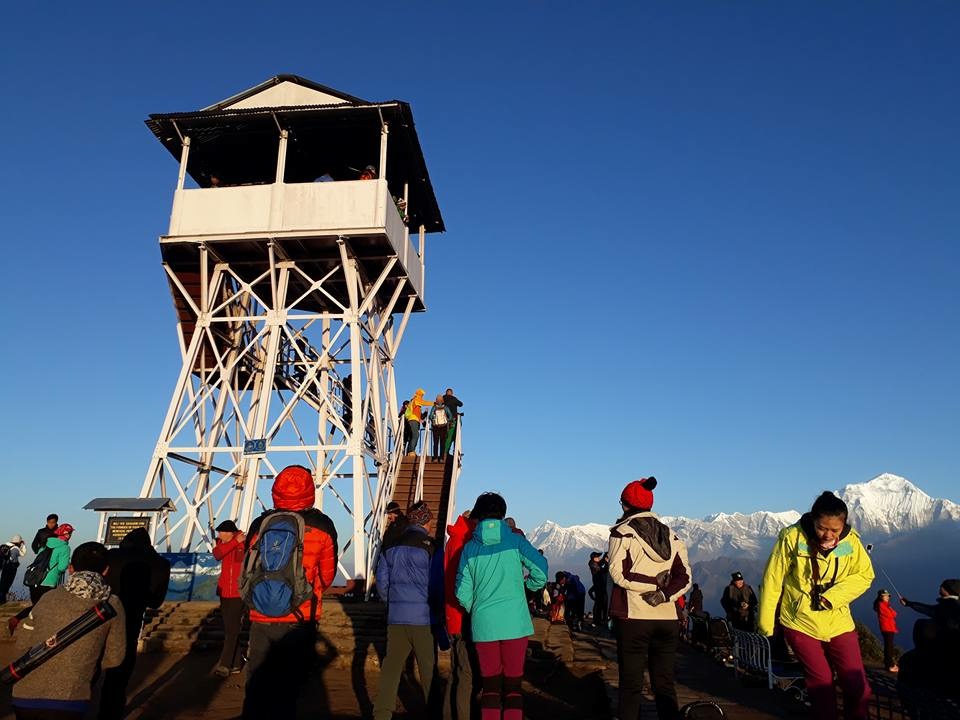
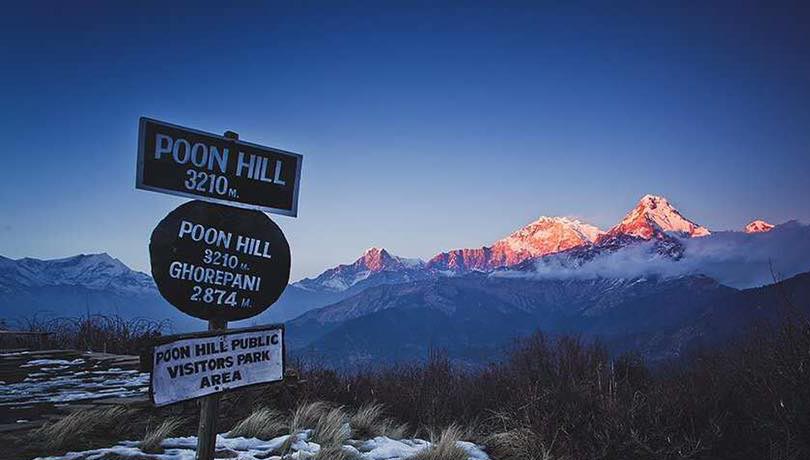
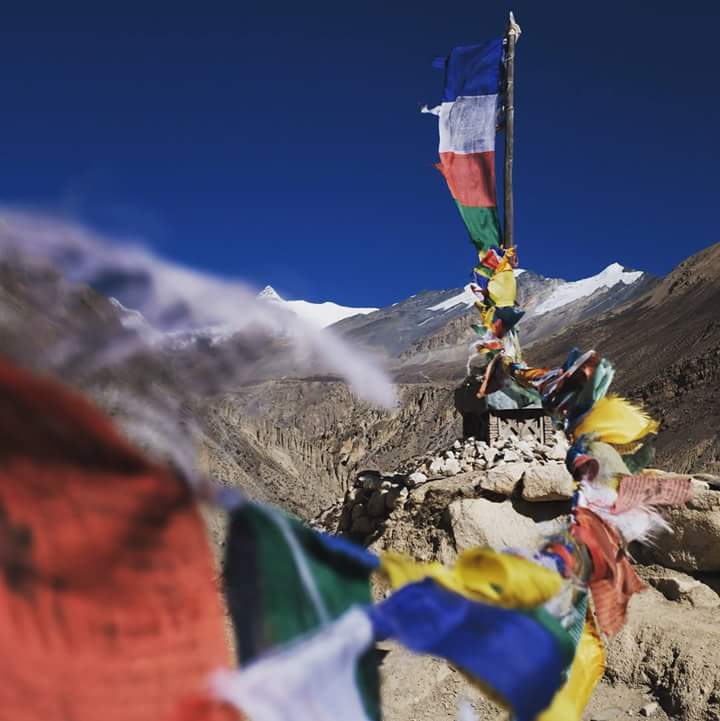
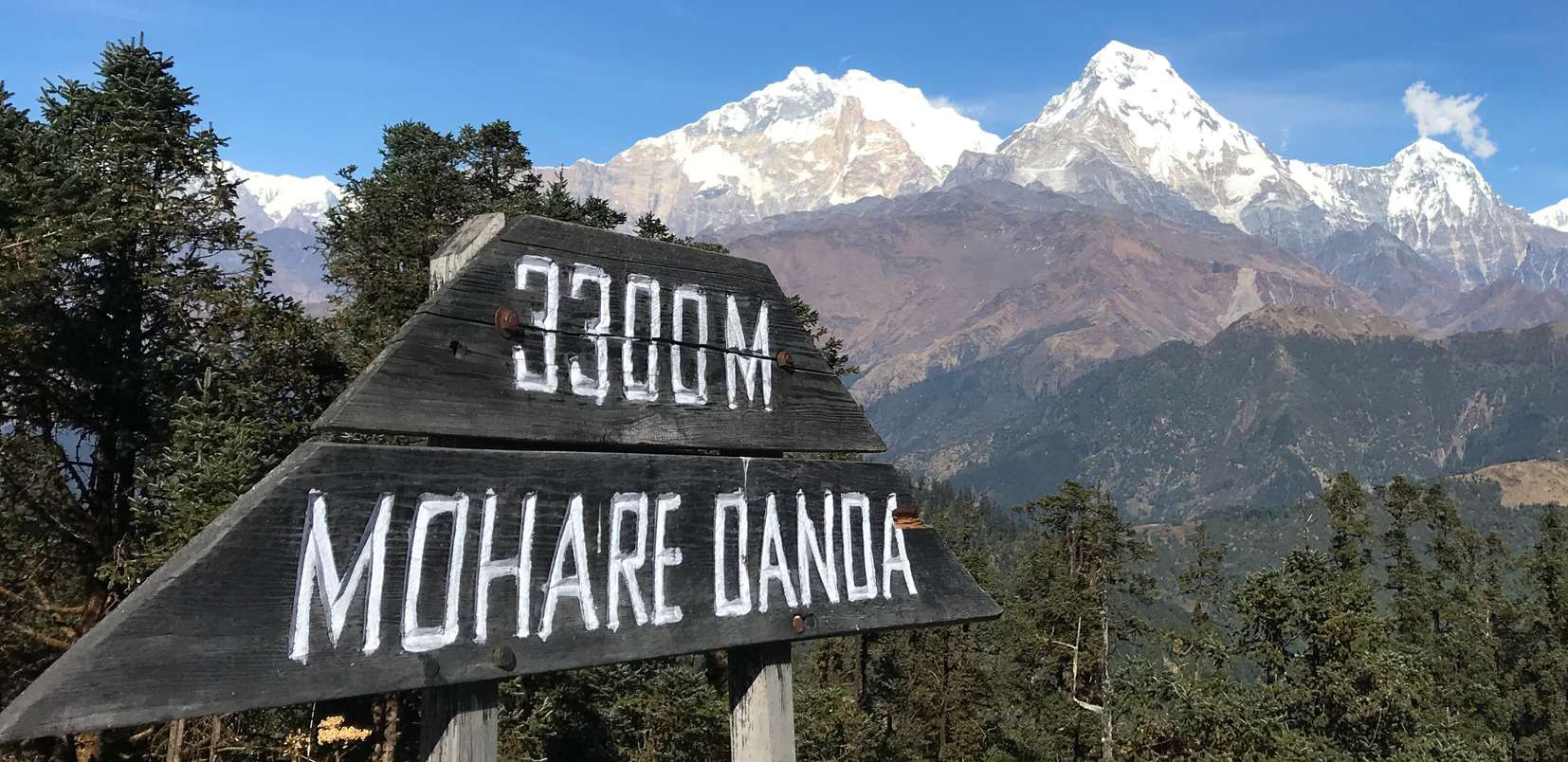
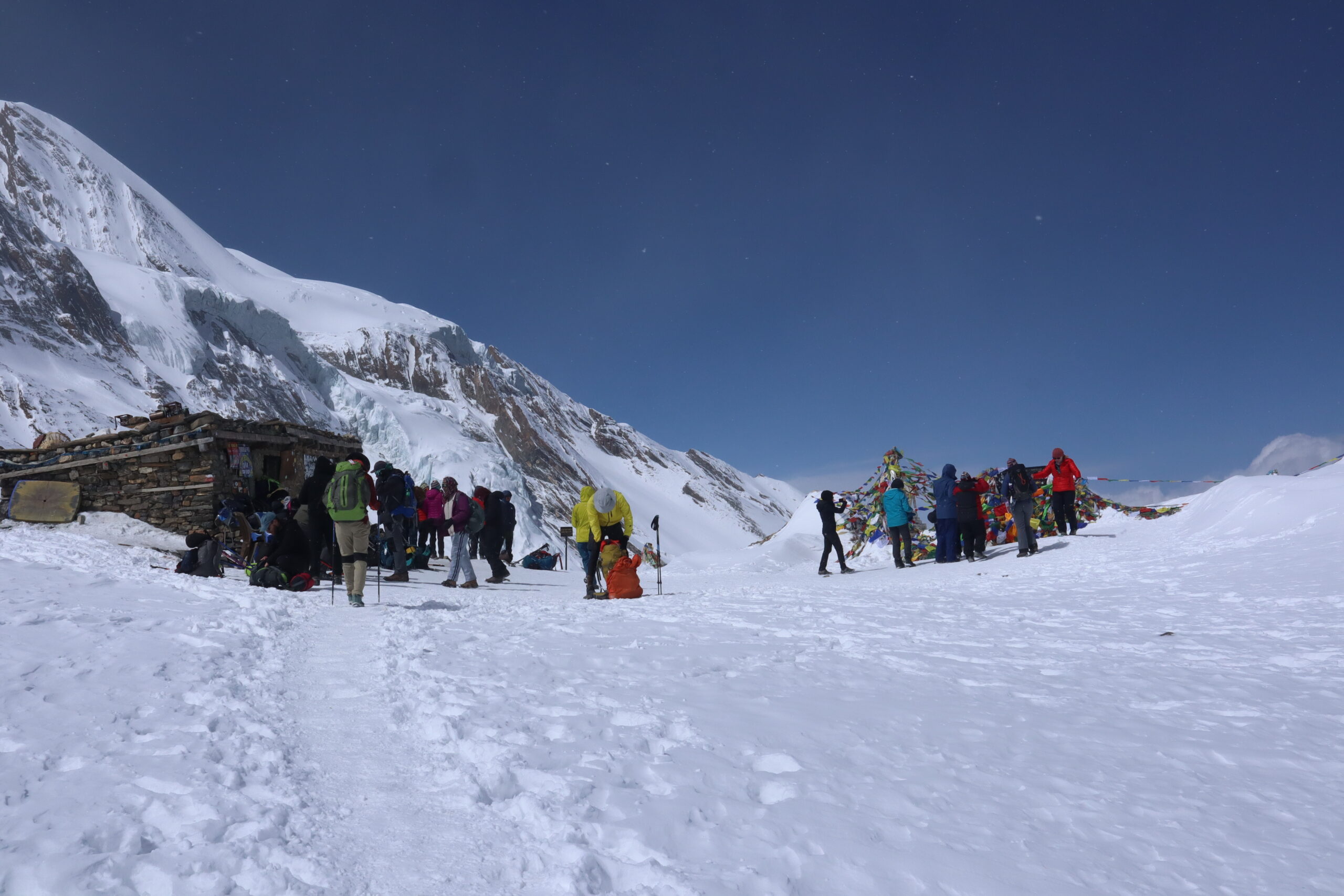
After rejoining the main trail, the hike continues through Thorong High Camp and Yak Kharka before reaching the difficult but worthwhile crossing of Thorong La Pass. The journey continues through Tatopani, Ghorepani, and Poon Hill, where you will witness one of Nepal’s most famous sunrise views. The descent to Muktinath signifies a change into warmer terrain and cultural immersion.
This trek gains a new dimension with the addition of Tilicho Lake (4,919m), one of the highest lakes in the world, which provides surreal reflections of snowy peaks in its icy blue waters. The 12-day Annapurna Circuit with Tilicho Lake, which is best in spring and fall, blends adventure and elevation, making it a popular choice for travelers seeking a brief but impactful Himalayan experience.
Day 01: Drive from Kathmandu to Chame (2630m/8628ft)
Day 02: Chame to Pisang (3210m/10531ft)
Day 03: Pisang to Manang (3540m/11600ft)
Day 04: Acclimatization day at Manang(3,540m/11,600ft).
Day 05: Trek to Siri Kharka (4,060m/13,320ft)
Day 06: Siri Kharka to Tilicho Lake Base Camp (4150m/13615ft).
Day 07: Base camp to Tilicho Lake (4920m) and trek to Siri Kharka
Day 08: Trek from Siri Kharka to Yak Kharka (4060m/13,020ft)
Day 09: Trek from Yak Kharka to Phedi (4420m).
Day 10: Trek from Phedi to Muktinath (3800m).
Day 11: Drive from Muktinath to Jomsom (2713m) via Kagbeni(2810m).
Day 12: Jomsom to Pokhara.
Day 13: Drive Back to Kathmandu
Day 01: Drive Kathmandu to Chame (2630m) 10 – 12hr
Early morning we drive from Kathmandu for about 10 hours to the village of Chame through beautiful villages, farms, flowing rivers, and a glimpse of beautiful mountain ranges. Along the way we will enjoy with several waterfalls forming a river by the sandy beaches. We follow a trail through barley, rice, and potato fields. and pass through the village of Koto which is one of the biggest villages in the Manang valley.
Key Notes
- To get to Chame from Kathmandu you can take a Public bus to Besisahar and next day drive to Chame otherwise if you take private jeep from Kathmandu you will get there on the same day. The distance from Kathmandu to Besisahar is 175 km. It takes around 6 to 7 hours to get from Kathmandu to Besisahar after besisahar takes us to get chame nearly 4 more hour which is about 60km .
- See some waterfall on the way
- From Besisahar to Chame is about 60km. It takes around 4 hours to get from Besisahar. The time it takes from Besisahar to Chame depends on the road conditions from Besisahar.
- You can get Wi-Fi service at teahouses. The Wi-Fi service might be slow depend on number of device use in the hotel.
- Chame is a village, between the start of the trek and Manang. It is a place to buy snacks, medicines and gear.
- There is a spring in Chame. It is a pool made by people. You can visit it if you have time.
- There are no ATMs from Chame onwards. So travelers should bring local currency before they get to Chame.
Driving Distance – 255 KM
Included Meal: Lunch and Dinner
Day 02: Chame to Pisang (3210m). 5 – 7 hours
We walk through a steep and narrow valley to have our first view of Paungda Danda’s rock face, a curved rock face rising 1500m from the river. From here, we also see clear views of Annapurna 2 to the south and Pisang Peak to the northeast. Next, we descend to the Manang Valley floor.
Key Notes
- Bhratang is a nice place that you do not expect to find. You should try the apple juice that is squeezed fresh and any baked things that you can find.
- Today you can look at the scenery. It is very beautiful. The views are nice. You can enjoy them.
Trek Distance – 14 km / 8.2miles
Included Meals: Breakfast, Lunch, and Dinner
Day 03: Pisang to Manang (3540m).5 – 7 hours
We trek on the upper trail through Ghyaru (3730m/12237ft) – Ngawal (3660m/12007ft) – Braga (3450m/11318ft) – Manang (3540m/11614ft), we choose this trail as it offers outstanding views of the north face of Annapurna II, III, IV, Gangapurna, Tilicho, and Pisang Peak .as we ascend well feel the air turn cold, dry and harsher. The trail goes through Tibetan settlements and we get a chance to explore Buddhist culture in a short visit to Barge Monastery, the largest in Manang.
Key Notes
- Most of the day you will be going up a steep path from the mani wall to Ghyaru. You have to be careful drink a lot of water and rest for a while after that.
- Ghyaru is a place to have a slow and relaxing brunch. I really liked sitting at the viewpoint and talking to people who were trekking and looking at the views.
- The views from here are some of the best you will see on the trek.
- This day can be very long 17 km. It might be the longest day for you. Some people like to stop and stay in Braga for the night.
- Manang has more things you might need like places to buy gear and snacks and some nice things like cafes, a cinema and places to do your laundry.
Trek Distance – 17km / 10.6miles
Included Meals: Breakfast, Lunch, and Dinner
Day 04: Acclimatization day at Manang(3,540m/11,600ft)
This day you spend the second night in the Manang region to acclimatize to the higher elevations you will encounter towards the Thorung La. Take advice from the Himalayan Rescue Association and observe the spectacular views of the Himalayas nearby. There are fine views of the milky blue glacier lake at the foot of the spectacular Gangapurna icefall and traditional stone buildings.
Key Notes
- You can spend your day hanging out in Manang resting and preparing for the rest of the trek.
- If you feel that you need a day to recuperate, skip the hike and relax. Otherwise it is recommended some light walking to 100-200 metres higher above Gangapurna lake or Pragyen Gumpa
Included Meals: Breakfast, Lunch and Dinner
Day 05: Trek to Siri Kharka (4,060m/13,320ft) 4- 6hour
It’s a simpler hike from Manang to Siri Kharka. We follow the trail that passes through the coniferous trees after taking the upper route that descends to a river, which we will cross. We arrive in the Tibetan town of Khangsar after about three hours of walking, but we will keep going until we reach Shiri Kharka. We will enjoy breathtaking views of Mt. Chulu and the Gungang Himal on the paths.
Trek Distance – 10 km
Included Meals: Breakfast, Lunch and Dinner
Day 06: Siri Kharka to Tilicho Lake Base Camp (4150m).
The trail stays close to the river bed and soon we approach Khangsar, a superb view of the Great Barrier opens up.
Trek Distance – 8 km
Included Meals: Breakfast, Lunch and Dinner
Day 07: Visit Tilicho Lake (4,920m/16,138 ft) then Trek to Siri Kharka: 6 – 8 hours
The trail to the Tilicho Starts up a side valley and then traverses onto a moraine, making a long climb to 4710m. There is an outstanding view of Tarkeghyang, Gangapurna, and the Khangsar Kang. Tilicho Lake, the highest lake in the world at (4920m), presents a particularly dramatic spectacle. Sometimes its turquoise water reflects the surrounding peaks but more often it’s frozen solid. .After spending a memorable time at Tilicho Lake, we will trek down to Tilicho base camp
Trek Distance – 12 km
Included Meals: Breakfast, Lunch and Dinner
Day 08: Siri Kharka to Yak kharkaKharka (4060m/13,020ft):4 – 5 hours
A downhill walk to reach Khangsar village and pass ancient Tare Gumba. Visit the Gumba and traverse a bridge over Thorong Khola. Continue walking an uphill climb to reach Yak Kharka. A sight of yaks grazing. Stay Overnight.
Trek Distance – 12 km / 6.8miles
Included Meals: Breakfast, Lunch and Dinner
Day 09: Yak Kharka to Thorang Phedi (4420m).
From Yak Kharka, the trail climbs along the east bank of the Jarsang Khola, then descends and crosses the stream on a wooden bridge at 4310m. Blue sheep, and even snow-capped leopards, sometimes magically appear. The crow-like bird choughs, large lammergeiers, and Himalayan griffons circle you overhead. It is sometimes possible to see herds of blue mountain sheep at Phedi. Overnight at Phedi 4400m.
Trek Distance – 10 km / 6.2miles
Included Meals: Breakfast, Lunch and Dinner
Day 10: Thorang la Phedi to Muktinath (3800m).
The trail becomes steep immediately after leaving Thorung Phedi, switchbacking up moraines and following rocky ridges as it ascends to the Thorung La pass (5416m). You can see the long Great Barrier ridge, the Tibet-like region of Manang, as well as the Annapurna, Gangapurna, and the heavily glaciated peak of Khatung Kang (6484m). The trail descends crossing meadows steeply down to Muktinath. One of the most important pilgrimage sites for both Hindus and Buddhists. It is also home to many ethnics Tibetans and holy Buddhists.
Key Notes
- You should start early at around 4 am from Thorong Phedi or 5 am from High Camp.
- The Annapurna Circuit is really tough on this day but the hard part of the Annapurna Circuit is almost done.. You might need to give yourself a mental push to keep going.
- The scenery on the Annapurna Circuit throughout the day is pretty special. You should enjoy the trekking on the Annapurna Circuit because it is one of the rewarding days.
- Try not to get held up at High Camp on the Annapurna Circuit. The next section of the Annapurna Circuit creates loads of bottlenecks. You are only moving as fast as the person in front of you on the Annapurna Circuit.
- Muktinath is the name of the temple that draws all the pilgrims to Muktinath. You can visit the temple at Muktinath well as the Buddhist monastery at the other end of town, in Muktinath.
Trek Distance – 16 km
Included Meals: Breakfast, Lunch and Dinner
Day 11: Drive from Muktinath to Jomsom (2713m) via Kagbeni (2810m).
After breakfast in the morning at Muktinath we drive to Jomsom, we see people from Mustang who come to sell handicrafts to pilgrims. Among them, merchandise is the highly revered mollusk fossil called Shaligram. We will pass some ancient caves and view the impressive white snow-capped mountains. The trail stroll among meadows, streams, poplar, and , fruit trees, finally we arrive at Kagbeni a gateway to Upper Mustang; it has to pose Chortens and ochre-colored Gompa and monastery. overnight at Jomsom.
Key Notes
- Today will drive to jomsom through kagbeni. Kagbeni is a place to visit for a few hours. There are some guesthouses and cafes where you can eat lunch.
- Jomsom is a town. You can find guesthouses, restaurants and shops there. There is a Java Café. It is also an art gallery and a live music place.
- If you want side walk around jomsom you can visit Dumba Lake which is around 1 hour walking distance
Trek Distance – 21 km
Included Meals: Breakfast, Lunch and Dinner
Day 12: Flight from Jomsom to Pokhara.(25 min)
In the early morning, we will take a short flight to Pokhara. The view of Annapurna and Dhaulagiri mountains and the world’s deepest gorge, Kali Gandaki is stunning. After arriving in Pokhara relax the whole day in Hotel or wander around Lake Side with its fascinating mountains panorama view and nature charming. Explore the various interesting places like David’s Fall, Gupteshore Cave and Tibetan Refugee Camp.
Included Meal: Breakfast
Day 13: Drive Back to Kathmandu(6 – 8hour)
After breakfast on our fourth day, we will travel to Kathmandu by tourist bus from Pokhara. Paying an additional fee, you can opt to take a 25-minute flight or Private Transport, which is not part of the package. At Kathmandu, our trek package is complete.
Cost Included
- 3 Star Category hotel Accommodation in Pokhara on a twin-sharing basis including Breakfast.
- Transport from Pokhara to Kathmandu by Tourist Bus
- Government license holder experienced, trekking Guide and porters (1 porter for 2 trekkers) with their food, accommodation, salary, equipment, and accidental insurance, clothing, and medicine.
- Tea house/Lodges Accommodation including Breakfast, Lunch, and Dinner during the trekking.
- Annapurna Conservation Area Trekking Permit.
- TIMS Trekking Permit (Trekking Information Management System) Card for the Annapurna Trek
- Himalayan Sanctuary Adventure Duffel Bag.
- Kathmandu to Chame by private vehicles .
- Jomsom Pokhara Flight
- Farewell Nepali Dinner in Kathmandu.
- All Government and Applicable Taxes.
Cost Excluded
- Accommodation in Kathmandu
- Meals in Kathmandu & Pokhara.
- Entrance Fees, Tour Guide and Sightseeing
- Extra night accommodation in case of early return from Trekking.
- Nepal entry visa fee, you can get a Nepal visa upon arrival at the Airport.
- International Airfare/Airport tax, Kathmandu City tour Sightseeing entry fees.
- Personal expenses such as Alcoholic drinks, hot showers, Mineral/ hot water, and Desserts. laundry, Tea, Coffee, All kind of hot and cold drinks, telephone calls, sweets, snacks, beverages and bar bills, and camera battery charging.
- Travel Insurance (Essential – Should include emergency evacuation coverage while trekking up to 5500+ meters).
- Personal trekking gear
- Tips for tour/ trekking staff and driver
- What type of shape do I need to be in, is this trip for me?
Trek in the Annapurn Region is suitable for average people who are moderately fit, thus no previous experience is required. Some physical fitness programs such as running, swimming, and hiking is recommended before you embark on your journey. Persons suffering from a pre-existing medical condition must seek medical advice/consent before considering the trek.
- Is it possible to reserve a trip now and pay a deposit later or do I Have to pay a deposit at booking/reservation ?
Yes! The trip will be confirmed only when we receive the completed final booking form and a 30% deposit payment. You can pay the balance of the money when you arrive in Kathmandu.
- Will somebody come to pick me up from the airport upon my arrival?
Yes, One of the Airport representative from Himalayan sanctuary adventure will be there to greet you at the airport. They will be displaying your name outside the arrival terminal and then you will be transferred to your hotel overnight.
- What sort of accommodation can I expect in Kathmandu, Pokhara, and in trekking ?
We use standard rooms at 3 -star Category hotels in Kathmandu and Pokhara including breakfast. Along the trekking routes, teahouses/lodges generally provide basic clean facilities with a mattress and a quilt or blanket. We recommend you to have sleeping bags, it is always a good idea to have your own equipment for the trek. The lodges in trekking routes usually provide single and double rooms, or occasionally a dormitory style. At times when possible, dining will be around a bonfire. In teahouses, food will be prepared in the kitchen, which you should not enter without permission. The toilet in teahouses provides essential but basic facilities and is always outside the room.
- Are the guesthouses heated ?
The guesthouse does not facilitate with heater or air conditioner. However as it gets colder above 3,500m, they do have the facility of hitting the dining area by using kerosene or metal heater or firewood.
- Where do we go to the toilet along the trail ?
Wherever possible we utilize the toilet facilities provided by the tea houses/lodges on the trail. However, in case of emergency trekkers are recommended to find a private, scenic spot!
- What are the Toilet facilities in the teahouse/guesthouse ?
Most of the tea houses do have western style western-style style western-style flushing toilets however tea houses at higher elevations you could find squat toilets made of either a ceramic basin on the ground or a few planks precariously positioned over a hole in the ground which is always outside.
- What is the best season for this trekking ?
Our trekking season extends from mid-September to May. From early September the monsoonal rains decrease. By the end of September through to December, the weather is usually stable with mild to warm days, and cold nights. February, March, April, May, October, and November is the best Time.
- Is the food in the mountain prepared to international standards in terms of safety ?
Yes, the food is very safe during the trekking but we recommend you eat vegetarian and local food.
- Is water provided and is there still water available at higher altitudes ? Is it filtered/boiled ?
Bottled water is easily available at the lodges and tea houses where you can buy bottled water at the cost of USD 2 at lower elevations to USD 4 at higher elevation per littler. You can also drink the normal tap or spring water if you bring the purifying aid with you.
- Is there a possibility of getting separate rooms for the trip? If so how much extra will this cost ?
Normally, The lodges have twin-sharing and dormitory-styled rooms. The lodges will provide a private room for one person when available. In Kathmandu, USD 45 Per Room per Night would be added as a single supplement fee. The single supplements are always guaranteed in Kathmandu but not in the mountains especially during the peak time.
- What immunizations will I need ?
No vaccinations are compulsory in the Himalayas, but we do recommend you are covered for diphtheria & TB, hepatitis A, hepatitis B, Malaria, typhoid, polio, and tetanus. We also recommend: A dental check-up before traveling. That you know your blood group in case of emergency.
- What if I am very sick in the mountain ?
Our guides are 24 hours available for services during the trek. They are trained to use the first aid kit and have the knowledge to use an Oxy meter. They are very much aware that the higher the altitude the oxygen level gets lesser so to get updated on the oxygen level of our client and to know whether they are fit enough or need extra precautions to continue. Guides carry local sim cards for both Nepal Telecom and Ncell to update the whereabouts and the situation of every client. During the time of emergency, our guides are alert and keep updated with the head office in Kathmandu,
Click Here for 24/7 support- Can I obtain a visa for Nepal upon arrival at the airport ?
Yes, you can obtain a visa easily upon your arrival at Tribhuwan International Airport in Kathmandu. A tourist Visa with Multiple Entries for 30 days can be obtained by paying US $ 40 or equivalent foreign currency. Similarly, a Tourist Visa with Multiple entries for 90 days can be obtained by paying US $ 100. Please bring 2 copies of passport-size photos.
- How much additional money do I need per day ?
It depends on your spending habits. Generally, in Kathmandu and Pokhara, you can allocate USD 10 to USD 15 for lunch and dinner. USD 20 to USD 30 per person a day will be enough to buy meals, bottles of water, and chocolates, pay for the hot shower, and a few drinks during the trekking.
- Can I use credit cards in the places I visit in trekking ?
In Kathmandu and Pokhara, yes – to some extent. Once you are out of the cities, all you need is cash. Please change the currency to local Nepali Rupees before you go to the mountains.
- What mode of transportation do you use ?
We provide you only those options, which enhance your local experience while allowing you to travel comfortably and efficiently. We use private tourist vehicles for sightseeing, city tours, and pick-ups. Depending on the group size we use cars, minibuses, vans, and tourist bus to and from Kathmandu/ Pokhara.
- Is water provided and is there water for drinking available at higher altitudes? Is it filtered/boiled ?
Bottled water is easily available at the lodges and tea houses so can buy bottled water at the cost of USD 2 to USD 3 per litter. You can also drink the normal tap or spring water if you bring the purifying aid with you.
- What is your cancellation policy ?
A cancellation notice is required a minimum of 20 days before trip departure. If your trip is cut short due to weather/illness/personal reasons, there is no refund for accommodations unused. for more information please check
Term and Condition| Start Date | End Date | Price in USD | Availability | Booking | Note |
|---|
Avabillity Options
OPEN: This date is available and open for bookings. Go for it!
GUARANTEED: Guaranteed departure. Seat Available.
LIMITED: Guaranteed departure, Limited seat. You can send booking request for availability.
FULL:This date is currently unavailable. Please contact us if you are interested in traveling on this date.
Ratings & Reviews