140989/2072/073


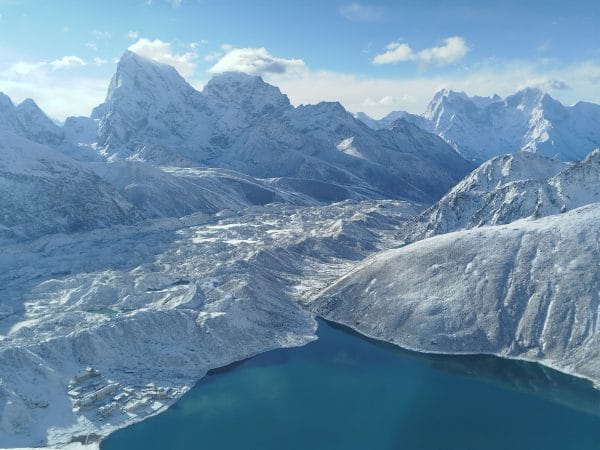
Gokyo Lake
Gokyo Valley Trek is located in the Khumbu region towards the west. The highlight of the Gokyo Valley Trek is to explore the remote and beautiful valleys, which leads us to the living of Sherpas and learn about their culture and tradition. You’ll complete a Lukla to Gokyo Lake trek in 5 days. The unexpected excellent views of mountains and lakes will make you feel relaxed.
Once you’re there, you will be surrounded by the warm love of the mountains and the culture of the people there. Flowing water, grazing yaks, and singing forests will arrest your heart. You’ll get an opportunity to explore Nepal’s internal beauty on this trip, with lots of unforgettable memories that will last a lifetime.
History of Gokyo Lakes
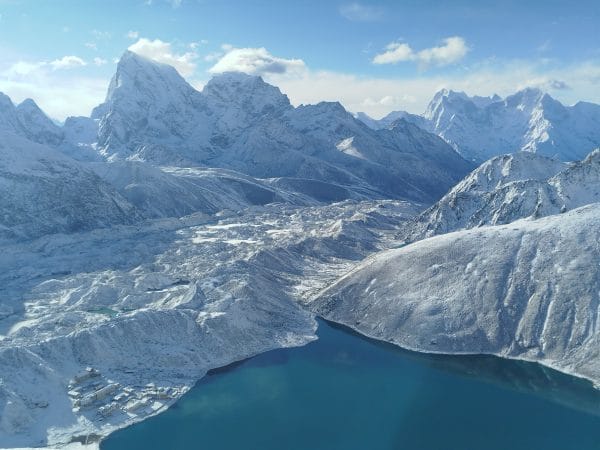
Gokyo Lakes
The primary lake, Gokyo Cho or Dudh Pokhari, is particularly revered, and these most stunning glacier lakes are of great religious significance. The spiritual and cultural customs of the Sherpa people, who live in the Everest region, are fundamental to Gokyo Lake’s history.
Both Buddhists and Hindus hold the six sacred lakes known as the Gokyo Lakes in high regard.
Hundreds of pilgrims, mostly Hindus from Nepal and India, visit the lake each year during the Janai Purnima festival to bathe in its water, which they believe to be a purifying and blessing ritual.
As explorers and adventurers started passing through the area in the 20th century, Gokyo Valley—home of the lakes—became more well-known.
Lake has developed into a popular destination over the years.
attracting adventurers drawn by its serene surroundings, sacred significance, and stunning vistas. Visitors and travelers looking for an alternative to the more well-traveled Everest Base Camp route were drawn to the region because of its relative seclusion and breathtaking natural beauty.
The elevation of Longponga Lake is 4,650 meters. On the Gokyo trek, it is the first lake you come across.
Surrounded by rocky, desolate landscapes, it is a small, calm body of water with turquoise blue hues.
Despite being smaller than the other lakes, it’s a serene location where tourists frequently stop to take in the surrounding peaks’ reflections on the placid surface.
It frequently freezes over in the winter, which heightens its icy allure.
The second lake, Taboche Tsho, is 4,710 meters high and marginally deeper than Longponga.
Its calm waters reflect the surrounding peaks, including Taboche and Cholatse, and it has a more vivid blue hue.
As visitors proceed deeper into the valley, this lake offers a stunning front that offers a broader perspective of the Gokyo area.
With a height of 4,790 meters, the third lake, also known as Gokyo Cho or Dudh Pokhari, is the biggest and most significant of the six lakes. Its name, Dudh Pokhari, means “Milk Lake” because of its icy blue hue, which stands out sharply against the untamed, mountainous landscape.The primary community in the region, Gokyo Village, is located along the lake’s shores and is where tourists stop to relax and get used to the surroundings. Since pilgrims frequently visit this lake during religious festivals and it is revered by both Hindus and Buddhists, it serves as a spiritual hub for the area.
The elevation of Thonak Tsho Lake is 4,870 meters. In terms of surface area, it is the largest lake in the Gokyo system and the fourth largest overall.
Compared to the first three lakes, this one feels more secluded and unspoiled because it is a little way off the main trekking route.
Its untamed surroundings and deep blue waters evoke a sense of peace and seclusion.
Few people visit the lake because of the rough terrain surrounding it, which adds to its beauty and makes it a great place for people looking for solitude.
The fifth lake, Ngozumpa Tsho, is situated near the enormous Ngozumpa Glacier, Nepal’s largest glacier, which rises to a height of 4,980 meters.
Upon arriving at this lake, visitors are rewarded with expansive views of Mount Everest and other high peaks in the world.
The scene is given a raw, rugged beauty by the elevation deposits and glacial waste that encircle the lake.
Trekkers who are trying to ascend Gokyo Ri or venture deeper into the valley also frequently visit this lake.
Tsho Gyazumpa
At 5,000 meters, Gyazumpa Tsho is the highest and most isolated Gokyo peak. It is situated in the upper Gokyo Valley.
Because of its distance and difficult terrain, it is rarely visited by tourists; however, those who do make the trip are rewarded with an unspoiled, pristine environment.
It feels like a secret paradise in the Himalayas because of the surreal atmosphere created by the nearby glaciers and snowfields.
From here, you can enjoy breathtaking views of Cho Oyu, Everest, and other nearby peaks.
What is the location of Gokyo trek ?
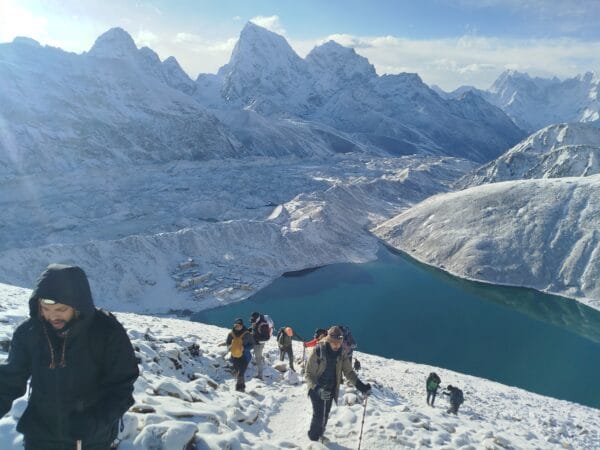
Way to Gokyo Ri
Gokyo Lakes is situated in the Gokyo Valley, which is part of the Sagarmatha National Park in northeastern Nepal’s Solukhumbu District.
The valley is located in the Everest region, which is well-known for being close to some of the highest mountains in the world, such as Mount Everest, Lhotse, and Cho Oyu.
The Lakes are located roughly at 27.9625° N, 86.6875° E, at elevations between 4,650 and 5,000 meters (15,255 and 16,404 feet).
To the west of the usual route to Everest Base Camp is gokyo lakes.
What has made Gokyo Lake well-known ?
For travelers looking for breathtaking natural beauty, spiritual encounters, and expansive views of the Everest region, Gokyo is a must-visit location because of the following features:
FAQ
The pre-monsoon (spring) and post-monsoon (autumn) seasons, which are normally March to May and September to November, are the ideal times of year to visit Gokyo Lake. These months provide stable weather, pleasant temperatures, and clear skies.
Spring (Mar – May) and Autumn (Sep-Nov) are the best seasons for the Everest Base Camp Trek. The clear weather, stable temperatures, awesome panoramic vistas, and comfortable trekking trails make these seasons ideal for this trek.
The rainy (Jun – Aug) and winter (Dec – Feb) seasons are not ideal due to unpredictable and unstable weather and temperature. The trekking trails are slippery, muddy, or snowy, and the availability of accommodations is limited.
Below equipment list is only a guideline. you can choose from your preferred brands using your expertise. You can also shop the below equipment and clothing at a reasonable price at stores in Thamel, Kathmandu. The personal items are of individual interest and choice. The most important fact that one should keep in mind is that one should have enough clothes to tackle the cold weather in the Himalayas.
Hand
Core Body
Lower Body – Legs
Feet
Other Essential
Medicines and First Aid Kit
Optional
Although trekking to Lake can be done on your own, it is advised to hire a local guide or join a trekking group for safety, navigation, and to improve your experience with support and local knowledge.
A delicate glacial ecosystem includes the Gokyo Lakes. They are crucial for preserving the hydrology and local environment.
The Himalayan tahr, the Himalayan monal (a colorful pheasant), and other high-altitude birds are among the species of wildlife that can be found near Gokyo Lake. Smaller mammals can also be found in the area, and snow leopards are occasionally spotted there.
But it’s crucial to honor regional traditions and get consent before snapping pictures of people, especially in places that are sensitive to religion or culture.
In conclusion
A stunning fusion of cultural diversity and natural beauty can be found at Gokyo Lake.
It’s a must-visit location for any adventure seeker because of its tranquil turquoise waters and breathtaking scenery. Gokyo promises a memorable experience, whether you’re drawn in by the spiritual significance, the difficulty of the trek, or the expansive views from Gokyo Ri.
Every part of this journey, from the serene waters of Dudh Pokhari to the extensive views from Gokyo Ri, encourages discovery and introspection.
Contact us on What’s app for more information and follow us on Facebook and Instagram and plan your trip in Nepal with us. You can also reach us by email: info@himalayasanctuary.com