140989/2072/073


Annapurna Base Camp Trek
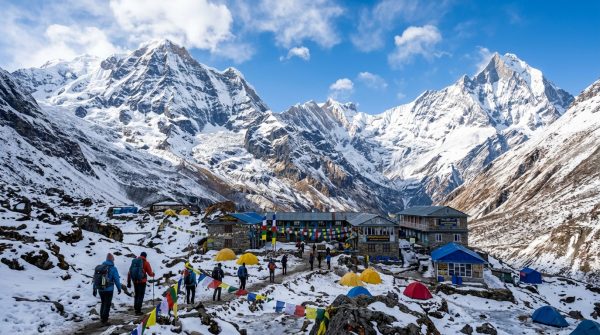
Annapurna Base camp Trek is one of the most popular trekking routes in Nepal, known for its stunning views, diverse landscapes, and rich culture. It takes trekkers through a variety of environments, from lush subtropical forests to alpine meadows and up to the towering snow-capped peaks of the Annapurna Range.
Annapurna Base Camp Trek is the most legendary and classical trek in the world. This trek offers a stunning Mountain View and allows experiencing the typical Nepali village, local people, and their way of traditional lifestyle in the Himalayas of Nepal. This is an unforgettable walk through diverse landscapes and cultures. Rich mountain vistas, terraced fields, quaint Gurung villages, and a wide variety of flora and fauna fill this trek. Mt. Annapurna (8091m) is also the 10th highest mountain in the world, it is a famous choice for solo travelers as well as adventure enthusiasts all around the world.
The ABC Trek Package offers you the opportunity to witness the Himalayan way of life while admiring the vast vistas of the mountains towering over the villages. The diversity encompasses not only the natural world but also the environment, culture, and people because the trail is situated inside the Annapurna Conservation Area.
ABC trek, often called the Annapurna Sanctuary Trek, starts in Pokhara, the city of lakes. You will arrive at the base camp, which is situated at an elevation of 4130m, after traveling via villages like Ghandruk, Chhomrong, Deurali, Bamboo, and Machhapuchre Base Camp. Additionally, the route leads you into the Annapurna Conservation Area, which is surrounded by the Annapurna mountain range and is home to ethnic Gurung and Magar settlements as well as a variety of plant and animal species.
Once you reach the base camp, the towering Himalayas will encircle you, making the difficult trek worthwhile. Along the route, you will pass through vibrant traditional communities, deep woods, and enormous cascades.
All things considered, which offers you the chance to immerse yourself in the traditional village life of Nepal while taking in the breathtaking views of the mountains and surrounding countryside. The Annapurna Base Camp Trekking leads you to the base camp of Mt. Annapurna (8091 m), the tenth-highest mountain in the world. You also get to explore the base camp of Mt. Machhapuchhre (6993 m), one of Nepal’s most ethereally gorgeous mountains, throughout the hike. The journey gives you the chance to see the local way of life and culture of the Himalayan area as you travel through villages inhabited by Gurung, Magar, and Rai groups.
In addition, the hike offers views of the Mount Annapurna massif, Mt. Gangapurna (7454 m), Mt. Machhapuchhre (6997 m), Mt. Lamjung (6983 m), Mt. Himchuli (6441 m), and several more peaks from the base camp.
Hence, what are the stupendous things of accommodation do you get on the ABC trek ? Well, we have you covered in this blog where we explain the lodges/teahouses that belong to each stop of the Annapurna Base Camp Trek – based on our normal itinerary
Accommodation Facilities during the ABC Trek
Accommodation during Annapurna Base Camp Trek
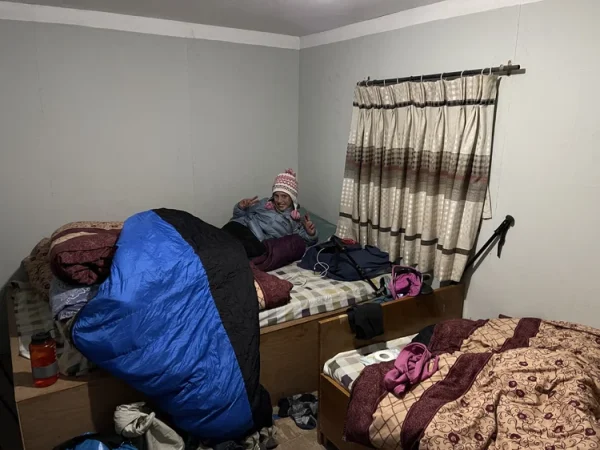
Above all, the type of accommodation is something one should keep in mind while going for the Annapurna Base Camp trek, and it may surprise you quite much.
If you have done any treks in Nepal, then perhaps you must be knowing something about the teahouse culture. However, if you haven’t done any trek yet and are planning your first ABC trek, then you should be prepared for much fewer tents but a lot of teahouses instead.
To help you understand about the teahouse culture in Nepal, let us tell you that teahouses are small lodging facilities owned by the local people who provide them to trekkers for staying.
Basically, teahouse is the way through which the locals generate business for themselves via the hospitality industry as well as provide affordable lodging and boarding facilities to trekkers on the Annapurna Base Camp trek.
In the teahouses, trekkers get decent rooms, wholesome food cooked at homes, along with some amenities.
Thus, these are some of the important aspects of accommodation in ABC trek.
But do not think that you can find luxurious facilities when trekking in the Annapurna Base Camp Trek. Availability of facilities, including amenities, is subjective and dependent upon the time of year you undertake the trek.
Availability of luxury amenities, such as western toilet, electrical supply, Internet connection, hot water, and other amenities, will depend on your elevation and location at rest.
Despite the fact that you can have an Internet connection while on the Annapurna Base Camp Trek, Wi-Fi is available at all the teahouses in the trekking route. But you have to pay extra money to use the Internet.
Day by Day Accommodation on the Annapurna Base Camp Trek
Considering the usual itinerary provided by Himalayan Sanctuary Adventure for the Annapurna Base Camp trek, here is the following list of expected amenities regarding the accommodation on the Annapurna Base Camp trek:
Day 01: Ulleri
Ulleri Village
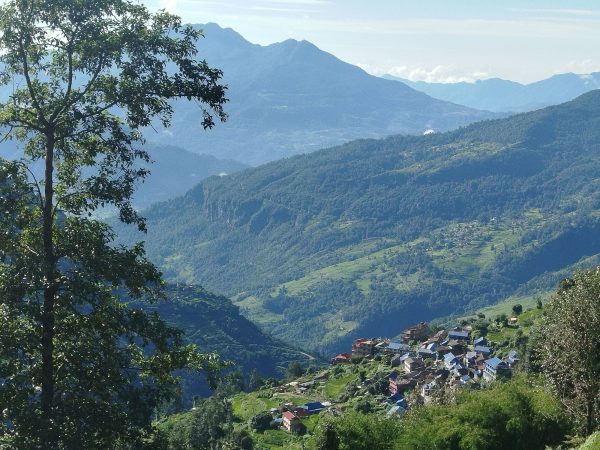
Starting off with Ulleri as your first destination on your way to the Annapurna Base Camp, there will be few tea houses at Ulleri with somewhat better facilities since you will not yet be on high altitude; that means you will be at 2,070 meters.
At Ulleri, you will be able to enjoy basic twin-sharing rooms with comfy beds and good blankets. In most cases, the rooms will have Attached bathroom facilities. But it will depend upon availability and season.
If you decide to make your trek during peak seasons, you will have to make do with shared bathroom facilities as well. There will be community dining area and good home-cooked meals will be served there for you. But at Ulleri, you can have hot showers, laundry facilities, internet, charging, etc facilities .
Day 02: Ghorepani
Ghorepani Village
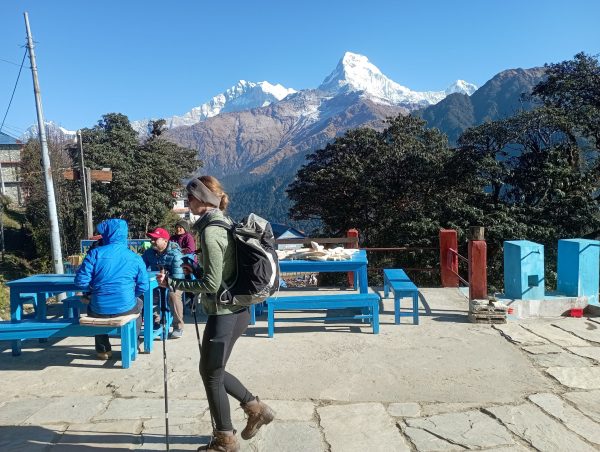
Continuing further to reach around 2,850 meters, Ghorepani is yet another vibrant village that offers well-equipped teahouses providing all the basic necessities required.
The accommodations here are quite spacious and comfortable, and in fact, most of the teahouses here provide you with rooms equipped with private toilets and showers that make you feel comfortable and relaxed.
You can also expect reliable internet facilities and charging ports here at Ghorepani but this has to be paid separately. The teahouses here may also provide an extensive range of food menus beyond just the local dishes in case you wish to try out some different food.
This place is rather more luxurious than the other villages in the Annapurna Base Camp trekking route.
During your stay in Ghorepani, you may also choose to incorporate this location in your trekking route as you go for the Ghorepani Poon Hill Trek which promises to be a great point to catch the sunrise.
Day 03: Tadapani
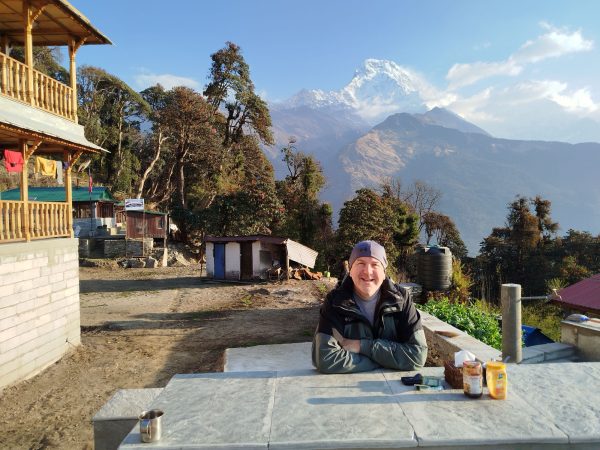
Tadapani Lodge
With an elevation of 2,630 meters, Tadapani is an average village with great views; however, its facilities are not very impressive as it is a relatively quiet area. Therefore, there are very few teahouses in Tadapani. Nevertheless, these teahouses are very comfortable as you will get cozy beds with soft mattresses and warm blankets in local Nepalese teahouses.
Regarding the facilities, you will have to be content with the shared bathrooms, as it will be difficult to get private bathrooms in Tadapani. You should always bring your sleeping bags for warmth and hygiene.
Day 04: Chhomrong
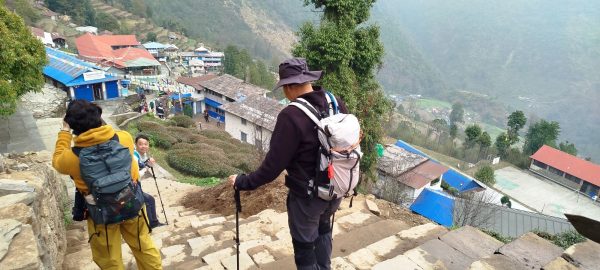
Chommrong Village
At an elevation of 2,140 meters, Chhomrong is one of the most significant places on the Annapurna Base Camp trek, and it also serves as an entry point to the impressive Annapurna Sanctuary.
You can be assured of getting some of the best accommodation in the entire journey in Chhomrong. Most of the teahouses have spacious rooms complete with private bathroom facilities. Clean and comfortable bedding guarantees that you can sleep well. However, it is advisable to ensure that there are vacant rooms before booking your stay.
If you pay some extra bucks ranging from 3 to 4 US dollars, you will also get the luxury of enjoying amenities like hot shower facilities, laundry service, charging station, and reliable Wi-Fi internet connectivity.
Additionally, be ready for a variety of dishes ranging from Western foods like pizzas and Nepalese traditional foods. You shouldn’t forget to taste the deliciously baked goods here! The panoramic views of the mountain range, including Annapurna South and Hiunchuli, are just an added advantage.
Day 05: Upper Sinuwa
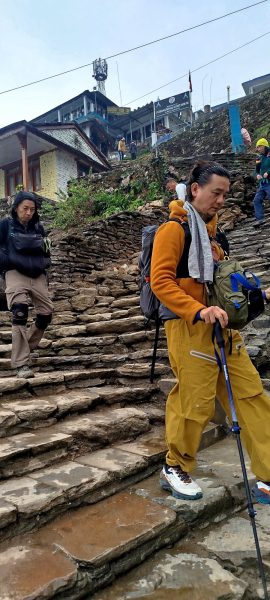
Upper Sinuwa
Sinuwa is found slightly deeper in the Annapurna Base Camp trek route and at the height of 2,340 meters. It is a peaceful village where there are simple accommodations provided.
There are not many lodges or teahouses in Sinuwa, which are distributed throughout the village. The facilities available here include beds, pillows, and blankets.
The accommodations in Sinuwa are normally made of wood and shared toilets are common as compared to private ones. There are extra charges for hot showers.
Day 06: Bamboo
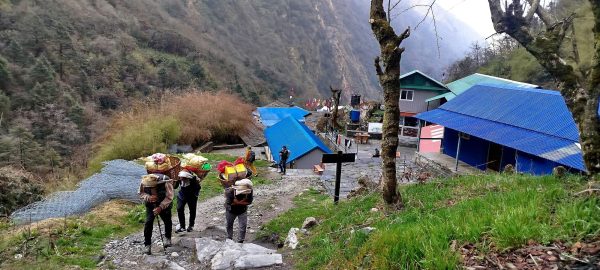
Bamboo Village
If you are staying at the bamboo village, which is situated at a height of 2,310 meters, then you can find simple teahouses/lodges with basic facilities for your stay surrounded by dense forest along with an atmosphere of isolation.
You can have cozy accommodation in teahouses where there is an availability of twin-sharing room along with a bed and blanket. Shared toilets are available because this region is quite remote and you are going into the depths of Annapurna Base Camp trek.
Hot water facilities are available at a certain price but are fewer in number and the rates may also be high. The facilities for laundry are not provided in this region except for washing yourself.
Meals are quite simple and served in the common dining area, which also has provision for charging and firewood. You should note that if you are trekking to ABC in winter season (December to February), you will find all these facilities.
There is Wi-Fi connectivity but is doubtful in terms of its availability. Therefore, the only major facility available in this village is the provision for accommodation and some energy before you take on the trek.
Day 07: Dovan
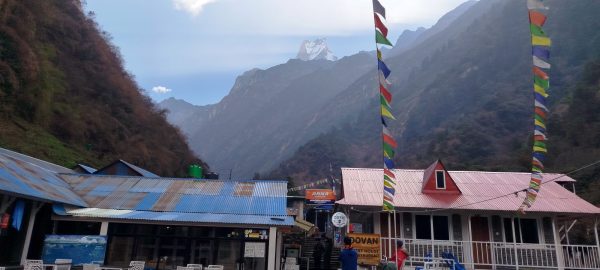
Dovan Village
If you are one who needs to adjust fully before heading up to the Annapurna Base Camp, you may consider stopping for an additional night at Dovan, which stands at a height of 2,600 meters.
This place offers simple teahouses. They are essentially similar to home stays, where you are going to stay with the locals and experience their hospitality firsthand.
Due to its isolated setting, as well as its high altitude, expect to stay in simple rooms equipped with just the basic amenities, such as a mattress, a blanket, and a shared bathroom. It would be advisable that you bring along your sleeping bag to keep you insulated from the extreme weather conditions here.
Limited facilities such as electricity and wi-fi are available. However, you will enjoy the peaceful environment provided by Mother Nature itself.
Day 08: Deurali (3230m/10,595ft)
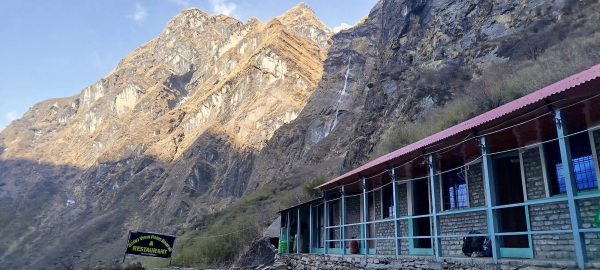
Deurali Lodge
Before heading up to the Annapurna Base Camp, you should be fully adjusted with Altitude, you may consider stopping for an additional night at Deurali, which stands at a height of (3230m/10,595ft).
This place offers simple teahouses/lodges. They are essentially similar to home stays, where you are going to stay with the locals and experience their hospitality firsthand.
Due to its isolated setting, as well as its high altitude, expect to stay in simple rooms equipped with just the basic amenities, such as a mattress, a blanket, and a shared bathroom. It would be advisable that you bring along your sleeping bag to keep you insulated from the extreme weather conditions here.
Day 09. Machhapuchhre Base Camp
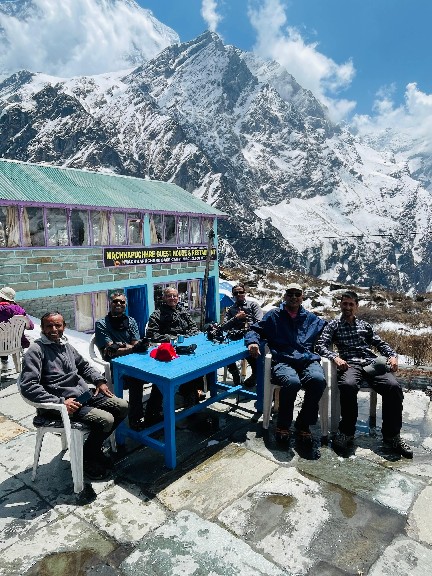
Machhapuchre Base Camp
Located at an elevation of 3,700 meters, MBC will make a nice detour on your way to Annapurna Base Camp. In addition to serving as a nice resting spot, it will also serve as the last base camp prior to your trekking up to the ABC.
Because of the challenging terrain and remote locations, it is only natural that MBC will be no more than basic facilities where you can warm yourself up and feed yourself some food from the teahouses at MBC.
There are no shower facilities provided at these tea houses, so do not expect to have one and better avoid having one if possible. By the way, it is advisable not to take a shower when at a higher altitude because you might contract altitude sickness.
WiFi is available at MBC, although the network speed should not be expected to be very good because the same network is being used by all trekkers. Electricity is also restricted. One thing for sure is that Machhapuchhre (Fishtail Mountain) will be visible from here.
Day 10. Annapurna Base Camp
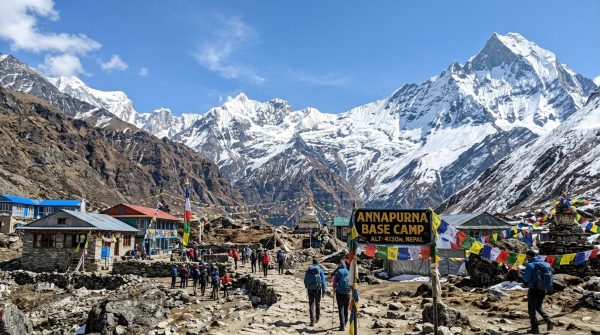
Annapurna Base Camp
The last destination and the highest elevation reached in the ABC treks would be none other than the Annapurna Base Camp, and needless to say, it will surely be worth the effort once you have entered the Annapurna Sanctuary.
The tea houses in the Annapurna Base Camps are simple and concentrate more on providing you with warmth during your stay. Expect common toilet facilities and either room sharing or dormitory-style accommodation.
Electricity is rare, and all power comes from solar energy sources, WiFi connection is present but not consistent, and there are no hot showers either, which you might not require at all since you would be enjoying the beautiful scenery all around.
The amazing views of the Annapurna mountain range, like Annapurna I (8091m), Annapurna III(7555m), Gandharva Chuli (6248m), Mt. Fistail, Tharpu Chuli (5695m), Himchuli (6441m), and Tarke Kang(7193m) and the surrounding areas will surely leave you in awe, as the Annapurna Sanctuary is famous for these views.
Day 11. Jhinu (Hot Spring)
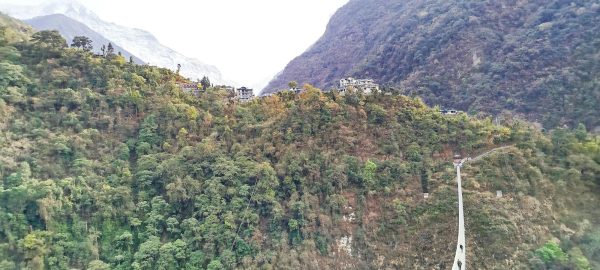
Jhinu Suspension Bridge
Jhinu is known to be one of the most comfortable places to rest while traveling back from the Annapurna Base Camp trek since there are natural hot springs here, which are known to help rejuvenate people.
Such hot springs may prove to be quite useful to those who have just finished trekking through the ABC but cannot quite conquer the consequences their bodies might suffer Unfortunately, there are numerous tea houses and lodges here that offer comfortable accommodation with a possibility of having your own bathroom and taking hot showers in order to fully enjoy the feeling of having conquered the legendary ABC trek.
There are even many tea houses that provide access to natural hot springs, allowing people to soak themselves in such springs with amazing mountain views.
FAQ
As per the rule of Annapurna conservation Are Project local are not allowed to build new lodges inside the protected area. The one already are not allowed to be more than one-story buildings.
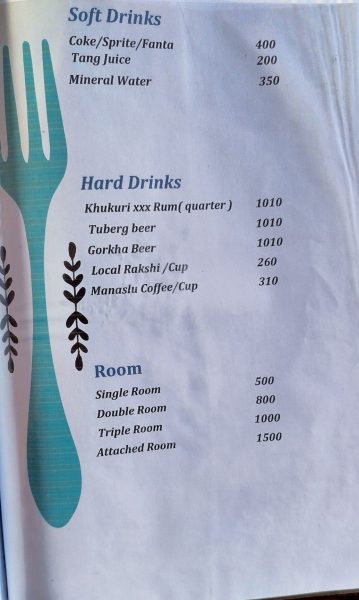
Drinks Menu
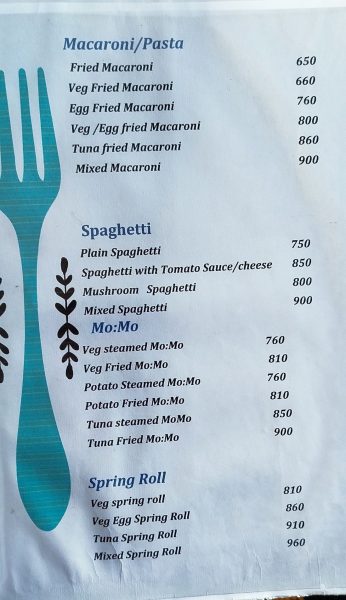
Lunch or Dinner Menu
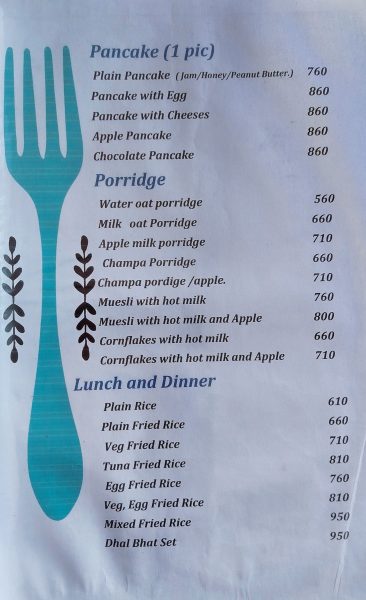
Breakfast Menu
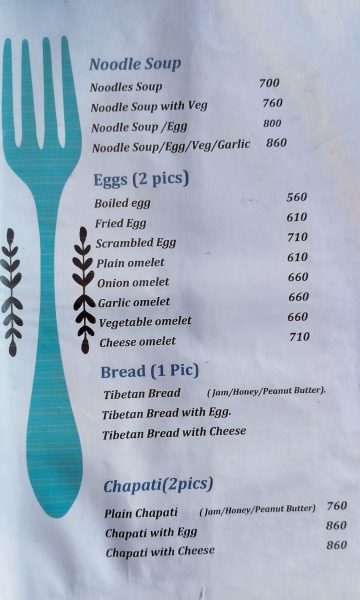
Breakfast Menu
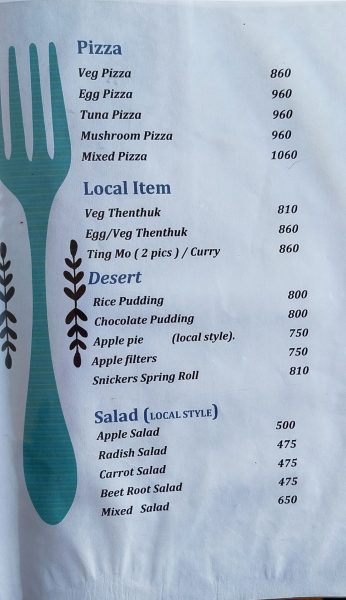
Lunch or Dinner Menu
The trekkers along the Annapurna Base Camp Trekking route can find a place to rest and eat their meals in some of the local lodging houses and tea shops along the trail. The common trend in the tea shops in the Annapurna region is that they stock all kinds of food, although you cannot expect to find all that you would like to have here. This is because the route is not yet accessible by motorized vehicles and any food needs to be carried by animals or porters to those tea shops.
When the peak season comes around, there are quite a lot of trekkers visiting the Annapurna Base Camp area. This means that the tea shops prepare accordingly, and this leads to more variety in their food offerings. However, during the low season, there will be very few choices for you regarding the kind of food you can order. Altitude has a great influence on the kind of foods available. Tea shops operating in higher altitudes have limited choices while those in lower altitudes offer more foods.
The meals served in tea shops on your way to the Annapurna Base Camp include vegetarian and non-vegetarian options. Non-vegetarian food should be avoided because consuming meat at high altitudes puts pressure on your metabolism and causes you to suffer from stomach-related problems. Moreover, frozen food should be avoided, as it is unhealthy since it takes a long time before it gets delivered to the tea shops. One of the worst things that could happen to you is getting sick between treks. Thus, try to reduce your consumption of non-vegetarian food and consume vegetarian meals only.
During your trekking trip in the Annapurna area, you will have three meals daily: breakfast, lunch, and dinner. You will need snacks, but they do not have to be carried in great numbers since they can easily be stored in your backpacks.
The cost of rooms is low because the trekkers are required to take all meals at one teahouse only. The cost of accommodation is normally USD $ 3 – USD $ 5 per night. This system works well with the locals and the trekkers. Most of the teahouses located along the ABC route are owned by families. These teahouses are monitored by the National Trust for Nature Conservation (NTNC). They establish some basic rules on pricing and meal requirements and the construction of new teahouses. If you spend the night at one teahouse and then go next door for cheaper meals, you have broken an unwritten contract.
A typical room in a teahouse will be a single, double or Tripple room that consists of two to three beds (single or double), a foam mattress, a pillow, and sheets. In addition, in all lower-altitude teahouses, basic furniture, including chairs, tables, and clothes hangers, is provided.
Teahouses will have beds, pillows, bedding, a dining room, food, and boiling water (additional cost).
Teahouses do not provide: hot Showers, towels, soap, toilet paper, electric lighting, room heaters, WiFi (All with an additional charge),